THE FACILITY

GENRE
Third person shooter
CONTRIBUITION
Solo developed
Technical environments
Ai Blueprinting
Level Design
Narrative Design
TIME
Four weeks
INTRODUCTION
SUMMARY
Players venture inside a hidden paranormal containment facility, where they need to find the source of the facility's corruption. The main loop on the level is
Exploration:
Player investigates and finds clues on events that occur on that location.
Reward:
Opens a new area, exposes narrative.
Blocker:
A combat event or puzzle prevents progression.
LEVEL OVERVIEW

Area breakdown:
I followed a four-part structure to help me set a pace. For me, pacing is one of the most important aspects of developing a level; it creates a structure and a rhythm that affects the player directly.

Investigating about Brutalist architecture and getting references was my first stop. After that, I boiled down the elements that would translate well to a blockout.
The architecture's symmetry and repetition allowed me to create patterns that help with depth perception and create a good mental map of the level.
BLOCKOUT
THE GAS STATION
Starting the level in an open explorable area sets expectations and teaches the player how to approach the level. Presenting an opportunity to explore that ultimately funnels towards the golden path.
A big enough area to have secrets and hidden paths, but small enough to understand its structure and explorable spaces.
I wanted to let the player explore and get used to the mechanics, have them find some objects to interact and spark curiosity to find collectibles
AWE EXPOSITION AREA
This area presents the main goal of the level, foreshadowing and teasing the space the player has to reach.
Only reachable after solving a puzzle, it serves as a downbeat where the player can take in the narrative of the space and explore for collectibles.
Making an area where the player lingers for a few minutes, incentivized by exploration and narrative reward.
Since the next major area is a combat encounter, having a control point (save area) close by will add a safety net if the player fails or decides to tackle it later. It is also a place between two major areas of the level, so if the player chooses to come back here, they can easily move between landmarks with ease and prevent backtracking.




Single Player
Third Person
10-15 minutes
PC (Gamepad support)
When the player approaches the singing trout it will ask the player to find a tv and place it near him since no foundation personnel has given him his daily tv time. The player will recive a collectible as a reward.
A simple element that fills the world and adds character.
Narrative-wise, I use this as an opportunity to expand the story and have branching elements preventing it from feeling like a singular, isolated event and more of a world occurrence.
CONCEPT
This was a solo technical project where I wanted to recreate elements of Remedy's 2019 Control. I focused on environmental interactions and basic enemy behavior. The challenge was to do it in one month and familiarize myself with Unreal Engine tools. While level design and narrative were not the main focus, I still wanted to create a world where these gameplay ingredients would live.
Key points.
Having working systems and gameplay.
Learn more about Unreal Engine and explore its elements.
Develop a narrative focused Level.
Have fun with it!
-
Familiarize the player with controls, mechanics, and introduce the narrative.
-
Grow on what the player already knows, presenting more complex challenges and a new twist on mechanics. Expand on the narrative and conclude at a high-intensity point.
-
The highest-intensity combat and narrative-wise. The player reaches the main goal but is presented with a new challenge.
-
A post climax that progressively lower the intensity and drives the pace to a conclusion narrative conclusive point.
SCRIPTING AND TECHNICAL
-
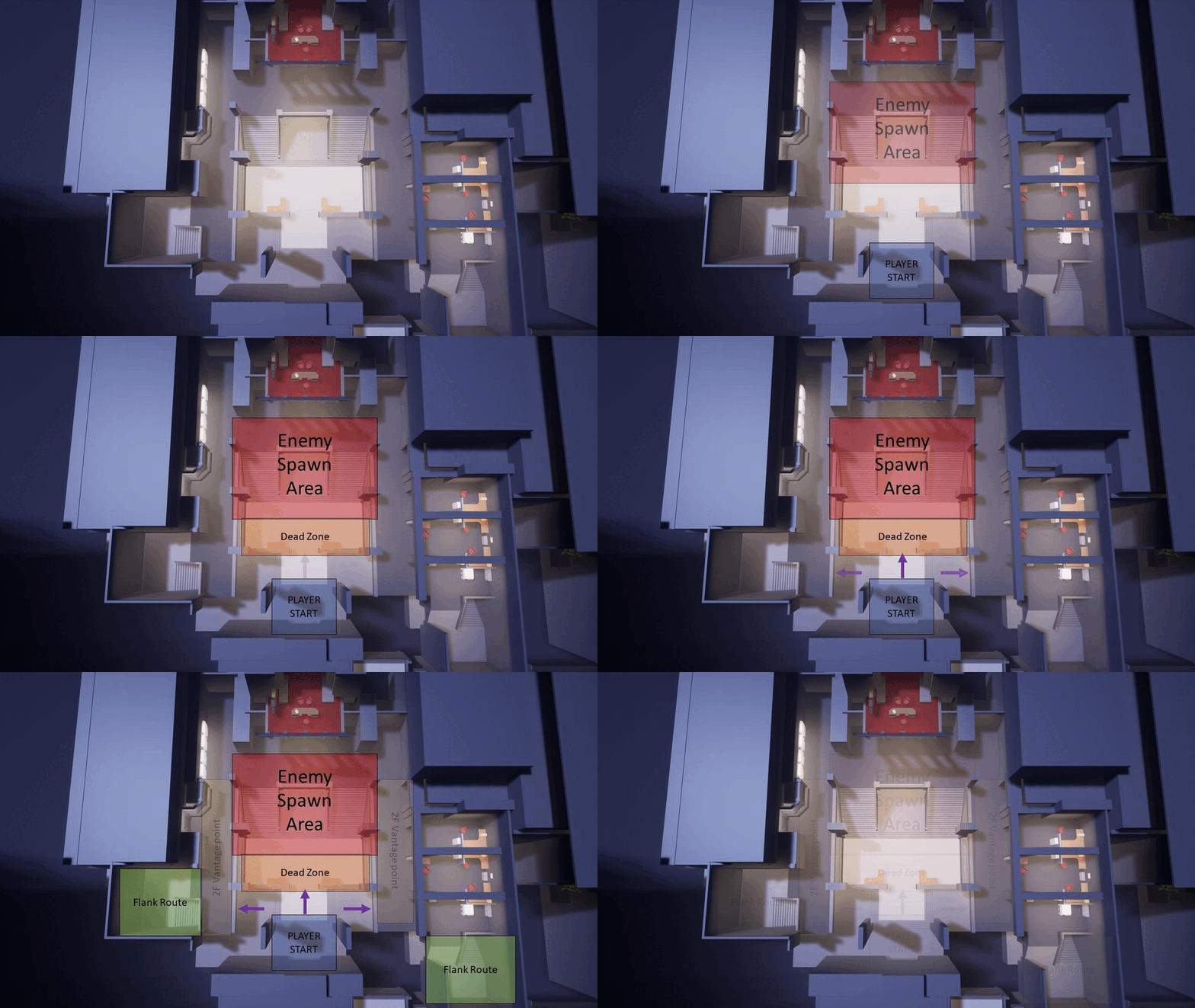
I wanted to keep the player moving by either pinching them with enemies or presenting them with a clear line of sight or better cover.
In the case of flying enemies, the area has a double height where players can get to their level and deal with them more efficiently.
For ground enemies, presenting a constant flow was important to promote player movement, opening opportunities but also closing them and cutting lines of sight, preventing the player from "camping" a specific location or having a one-location solution for the combat encounter.

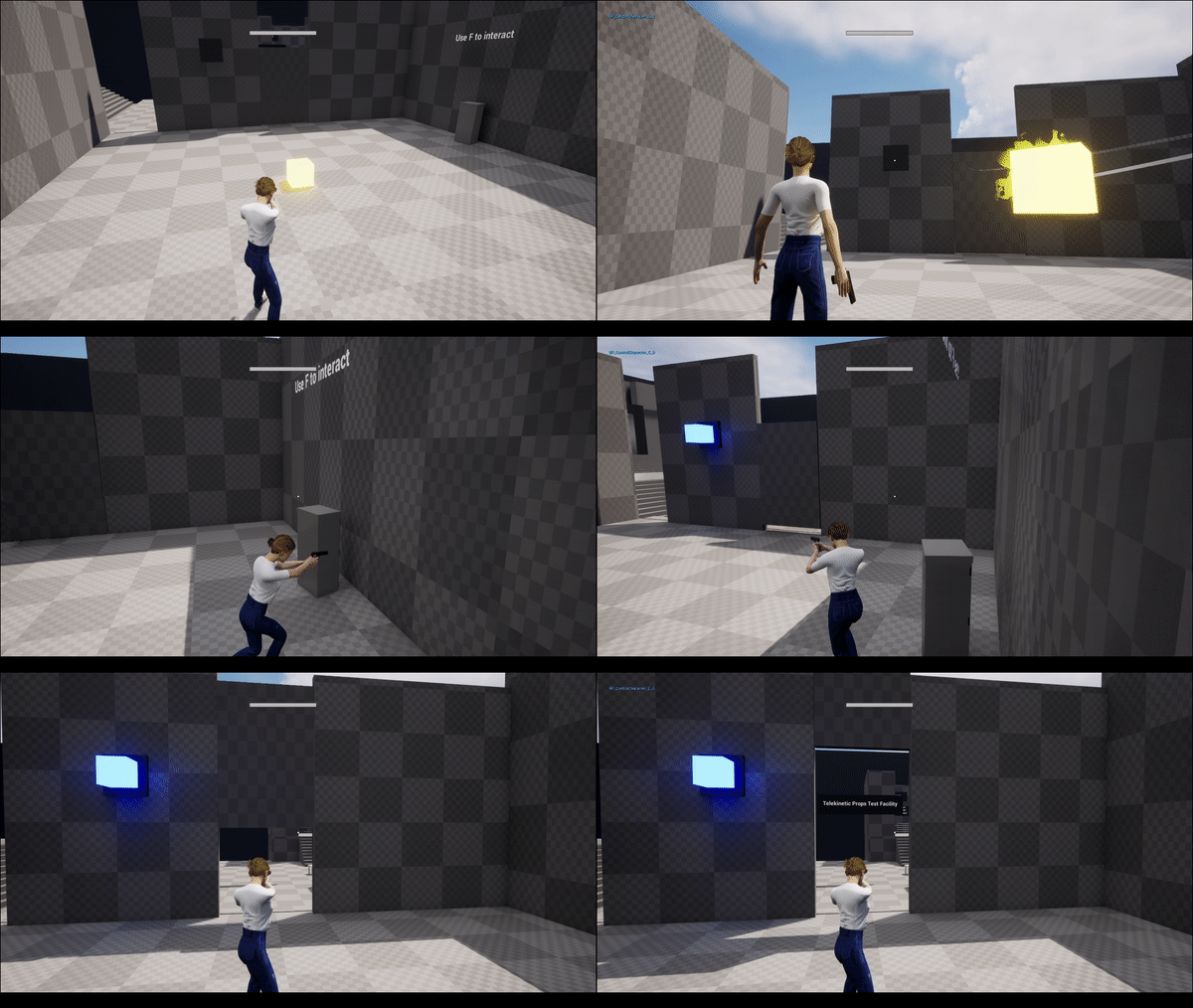


POWER CORE AND DOOR SCRIPTING
The base for this project was a Game Dev Pantry breakdown of Control's telekinesis, which I ended up retro-engineering to add an interaction system and gun shooting.
Doors act as blockers preventing players from progressing in an obvious way, which is why I decided to focus on this gameplay ingredient.
Making an interaction system was the core; I used it with collectibles, throwables, power cores, and doors. This saved me time on creating different scripts, and the positive of being able to easilly connect things togeter, a collectible pickup can open a door, a power core can spawn a collectible, and so on.
Using the power cores to unlock the doors, aside from being really fun, engages with game mechanics like telekinesis, blocks an area, and prevent progression when paired with a locked doorforcing exploration. That's the reason I wanted to recreate this mechanic; it touches all three of the pillars/loop segments I set at the start of the project.
ENEMY BEAHAVIOUR
Tackling Ai was a bit intimidating, and like every big task, I chopped it into parts and decided on the element that I would be able to take the most out of. Enemy positioning was something I wanted to explore to determine what would be the best solution.
In Control, enemies spread out and take advantage of the space, promoting player movement. This was something I wanted to explore and try to recreate.
After a deep dive into documentation, Unreal's query system seemed to be an optimal solution in the time frame I had.
What it does is take the player's location and, with that as its front, it draws 9 spheres around the enemy and reads the terrain for cover opportunities based on asset height. This was enough for me to simulate Control's smarter enemies.
I made a Flying enemy placeholder to represent enemy variation.
Spawning was handled with trigger volumes and optimal spawn locations where a random set number of enemies would spawn, except flying enemies, which were always defined inside the editor.
CONTAINMENT HUB
This area is the response to the question of, how this level fits into a larger project with other branches. So I made a hub-like area that has the opportunity to branch out and open an opportunity for connecting to a larger level system.
For this short scale level, I included another save location and the connection towards an easter egg/ side quest.
-
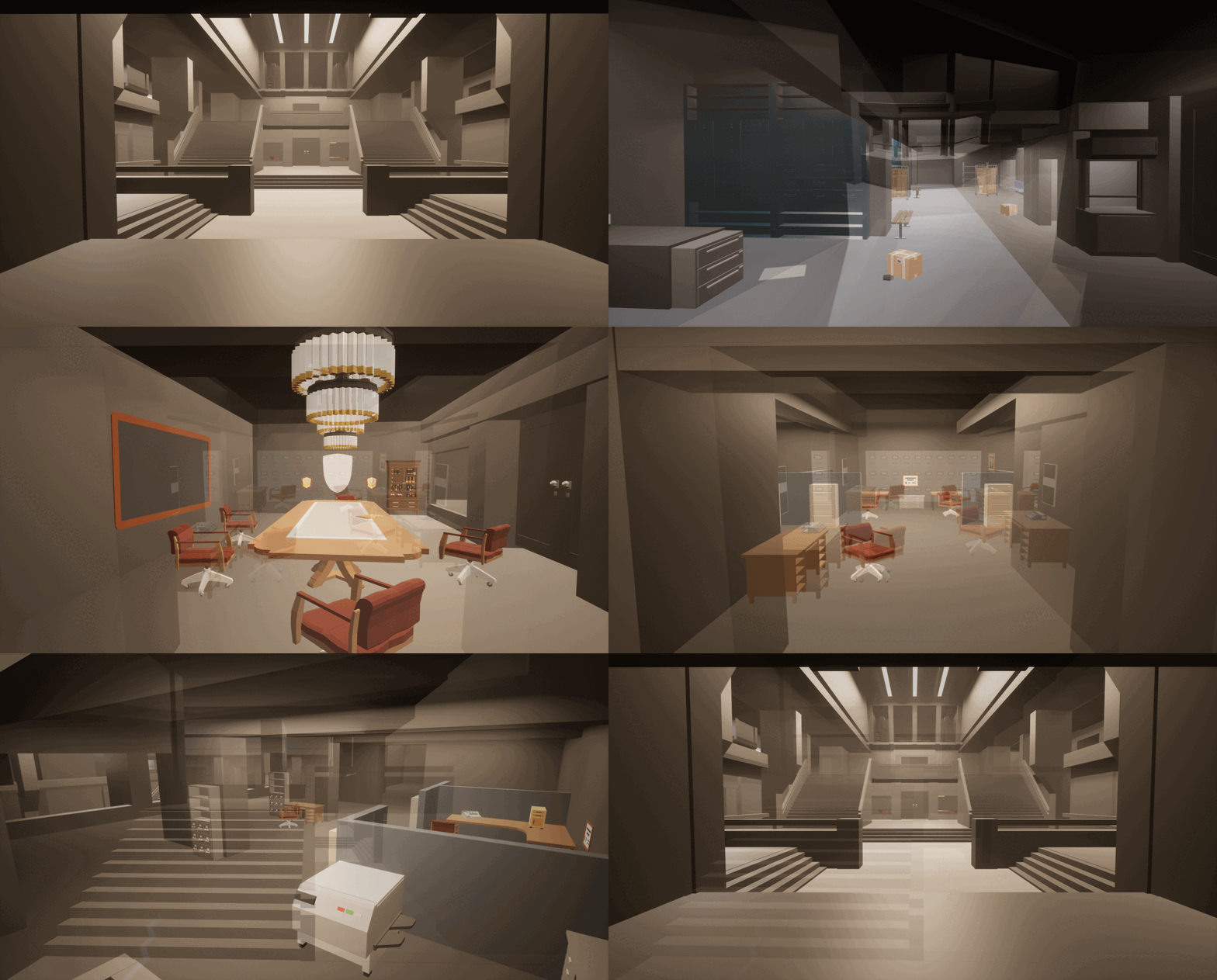
I went back to the narrative and punctuated elements to give every area a reason to exist. I asked questions like, How would the Bureau exploit this entity for its own advantage? What elements would a supernatural office require, and how can I match them to a real one? I listed elements they would need, like archives and a containment facility.
Once I had an idea of what this elements were, I jumped back to references and decided how the blockout would work. I was heavily inspired by the Archive sector in Control, because of how condensed the offices are and the way the space is presented.


Here was where I went a “side quest” myself and designed, wrote and voice acted a short experience for the player.
Not only for myself, but smaller moments that have humor or present a change in the overall structure are memorable and would create a positive impact when exploring.
As developers, we should also be having fun with the game we are making.

AWE CONTAINMENT FACILITY
The last part of the level was actually done quite early because of its positioning on the level.
This is meant to be the final encounter and highest intensity point of the level, reaching a high note, before the cool down.
While this is something that I don't think I fully achieved. I would start by creating an area better suited for combat and add a twist to it, like protecting a specific area or another element, to really separate this encounter from previous ones.
After reaching the main goal, I added a cool-down stretch that can serve as narrative exposition or reward the player for their achievement.
THE COLLECTIBLES
I scattered them on key locations of the map to give the player some extra information on what the environment is and a bit of background on the elements of the narrative.

Closing thoughts and post-mortem
This ended up being quite a dense level, with a lot of smaller interconnected rooms, and I really like that it comes from looking for the functionality of the spaces.
I am happy with some areas I created and how some elements coexist on the level.
There are still some points I would like to revisit, so:
WHAT WOULD I DO DIFFERENTLY TODAY,
My main focus would be on polishing pacing and creating a good intensity movement between the levels, and making sure to ramp up excitement on that last encounter by making it more engaging.
For geometry, there are some areas that would be great to add a bit more air between the connections and prevent them from feeling too cramped and on top of each other. More specifically, before the first combat encounter and the first power core puzzle.
Control has always been a huge influence on my work as a level designer and finally exploring a level directly tied to that world has been a fun experience.
Thank you for reading!